
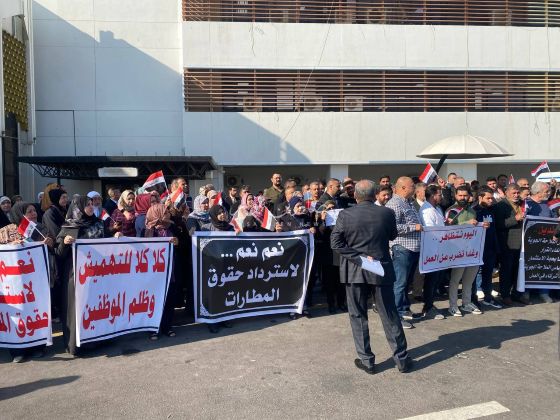
In recent weeks, workers in the civil aviation sector across several Iraqi airports have intensified protest actions in response to persistent violations of their fundamental labour rights. These developments reflect a deepening crisis in a strategic public service sector, driven by prolonged delays in the payment of wages and entitlements, deteriorating working conditions, and growing job insecurity resulting from administrative and institutional instability.
Workers have exercised their legitimate right to peaceful protest through sit-ins and demonstrations, while warning that continued disregard for their demands may lead to further escalation. Despite repeated appeals and official contacts, no effective or sustainable solutions have been put forward to date, further exacerbating workers’ frustration. Workers have nevertheless reaffirmed their commitment to peaceful action, while insisting that mobilization will continue until concrete measures are taken to address their grievances.
The current situation is the direct outcome of recent administrative and regulatory decisions that separated the management of certain airports from their established financial and administrative frameworks. This restructuring has created serious confusion regarding responsibility for wage payments and workers’ entitlements, resulting in salary delays of several months in some airports. These failures constitute a clear breach of the principle of “wages for work performed” and undermine the basic guarantees of decent work.
Workers have articulated clear and legitimate demands, including the immediate and full payment of all outstanding wages and financial entitlements, the guarantee of job security and protection against arbitrary dismissals or punitive measures, and the improvement of working conditions and the operational environment in airports, particularly with regard to occupational safety and health. They also call for the establishment of a transparent and accountable administrative and financial framework that safeguards workers’ rights, ensures continuity of services, and prevents the recurrence of such crises.
Trade unions stress that respect for labour rights, social dialogue, and collective representation is essential to resolving the current crisis. Ensuring timely payment of wages and decent working conditions is not only a legal obligation but a cornerstone of social justice, public safety, and the sustainability of vital public services.
 English
  Arabic