The Arab Trade Union Confederation is following with grave concern the accelerating developments in Iraq’s oil sector following proposals to reduce the monthly incentive paid to workers in oil companies and self-financing enterprises an incentive that represents nearly half of their total monthly income.
This is not a minor administrative adjustment. It is a direct and substantial wage cut that would strike at the livelihood of thousands of working families in one of the most dangerous and strategically vital sectors of the country.
Oil workers in Iraq are not peripheral employees. They are the backbone of the national economy. Through their labor in oil fields, refineries, terminals, and pipelines, they generate the revenues that finance the state budget, pay public sector salaries, and sustain essential services. Targeting their income without prior dialogue, consultation, orcollective bargaining sends a deeply troubling signal about how national wealth is distributed and whose sacrifices are considered expendable.
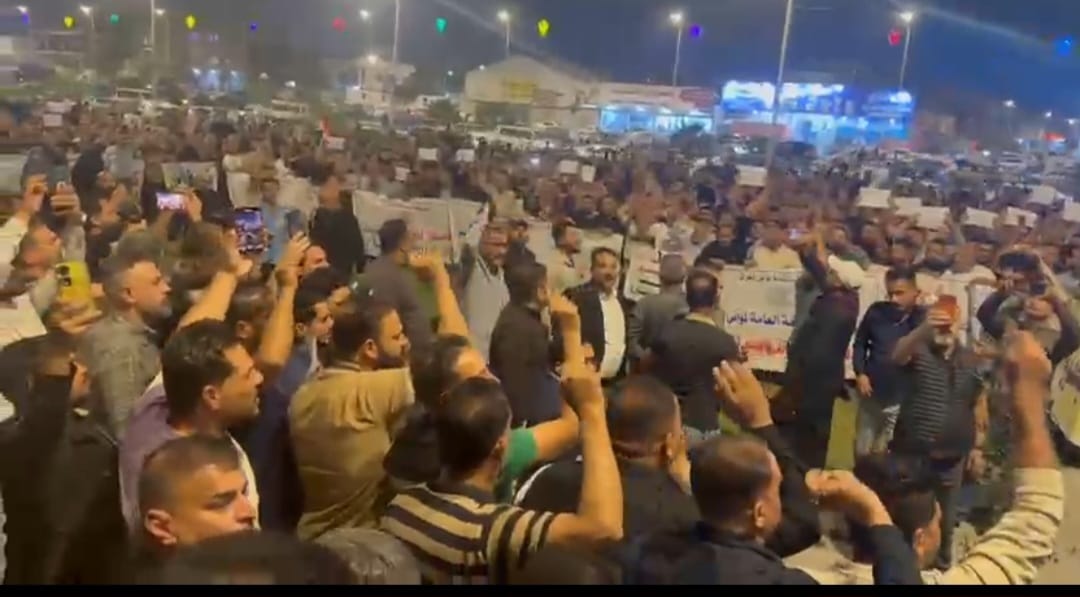
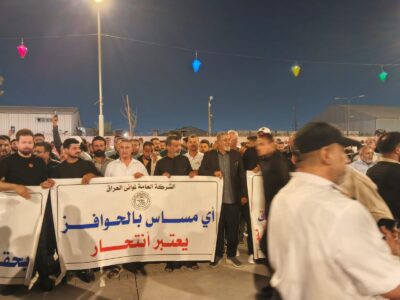
On 23 February 2026, Basra witnessed a significant workers’ gathering where union representatives firmly rejected the proposal of the Economic Committee to reduce the incentive under the justification of financial constraints. Speakers at the gathering, including union member Wissam Rahman Matar, made clear that this incentive is not a temporary privilege. It is an acquired right, directly linked to the hazardous nature of oil work and the demanding conditions under which it is performed. The possibility of a general strike was openly raised an indication of the seriousness of the situation and the depth of anger within the sector.
The Arab Trade Union Confederation affirms its full solidarity with Iraqi oil workers. Any fundamental change affecting wages or established benefits must comply with international labour standards and respect the principles of freedom of association and collective bargaining as enshrined by the International Labour Organization, including Conventions No. 87 and No. 98. Workers have the right to prior consultation and genuine negotiation on matters affecting their working conditions. Unilateral decisions imposed without meaningful social dialogue violate both the spirit and the letter of these standards.
Economic crises cannot be resolved by transferring the burden of fiscal imbalance onto workers’ shoulders. Real reform begins with tackling waste, corruption, and mismanagement, and with reassessing public spending priorities—not by reducing the incomes of those who generate the country’s wealth. Cutting an incentive that represents nearly half of a worker’s effective salary is not an efficiency measure; it is a drastic deterioration of living standards that risks destabilizing oil-producing regions and fueling broader social tension.
Social dialogue is not an option it is an obligation. The oil sector is the lifeblood of Iraq’s economy. Any disruption would carry significant economic consequences. Responsible governance requires opening immediate and serious negotiations with workers’ representatives to seek balanced solutions that safeguard public finances without undermining workers’ rights and dignity.
The Arab Trade Union Confederation reiterates its unwavering solidarity with Iraqi oil workers in their legitimate defense of their acquired rights. We call upon the Iraqi government to reconsider the proposed measures and to initiate urgent, good-faith dialogue that upholds social justice and respects the dignity of labor.
National wealth is not built on accounting formulas it is built by workers. Any reform that excludes them from its center is neither just nor sustainable.

 English
  Arabic