

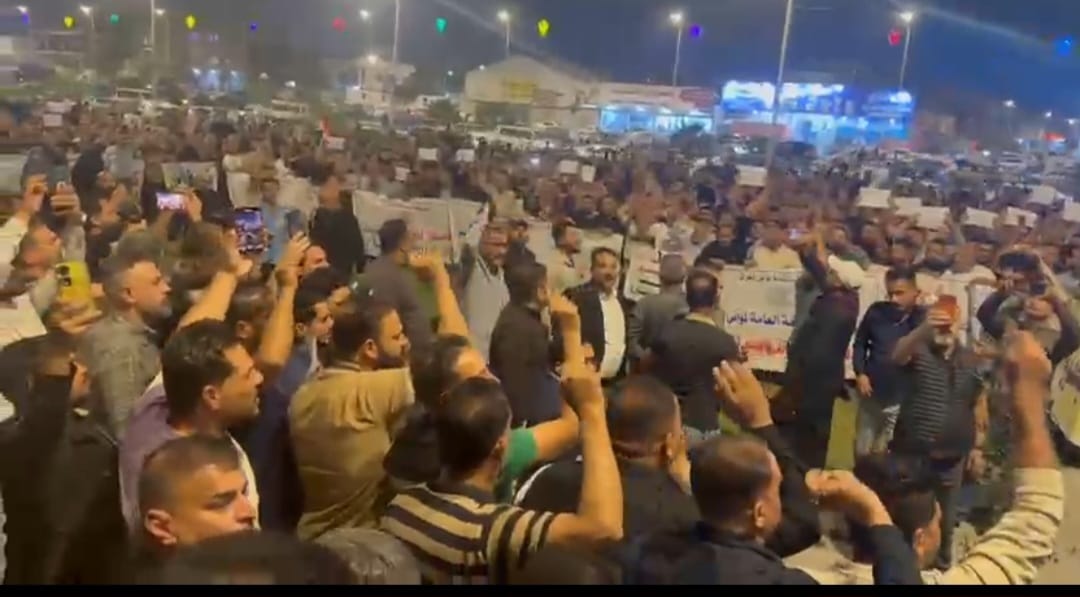
The Arab Trade Union Confederation (ATUC) has received information regarding ongoing protest actions carried out by workers at Tartous Port in Syria, following the issuance of what has been described as “unjust and arbitrary” decisions to transfer several employees to the Jarablus and Al-Bukamal border crossings in the eastern regions—areas known for extremely challenging working and living conditions.
According to the information received by ATUC, workers were informed of their transfer orders via WhatsApp, without any prior official administrative notification. This constitutes a clear violation of Syria’s Basic Law of Public Employees and undermines the most fundamental principles of transparency and proper administrative procedure.
These decisions have sparked widespread discontent among the workforce, who are demanding the cancellation of the arbitrary transfers, which threaten their family stability, livelihoods, and personal safety—particularly given their inability to bear the high costs of travel and accommodation in these remote areas. As a result, many workers are reportedly considering resignation, risking the loss of their only source of income.
These developments come amid increasing complaints within several Syrian public institutions regarding transfer and appointment mechanisms, at a time when public-sector employees are already struggling under severe economic hardship and a sharp decline in the purchasing power of their wages.
In a related development, the Syrian Observatory reported on 29 November that workers and permanent employees at Latakia Port expressed deep concern and dissatisfaction following similar transfer decisions affecting around 100 employees, sending them to remote border crossings such as Al-Bukamal in eastern Deir ez-Zor, Al-Rai crossing in northern Aleppo, and Al-Hammam crossing in northwestern Aleppo. Workers described these decisions as arbitrary and disconnected from their social and economic realities.
Hind Ben Ammar, Executive Secretary of the Arab Trade Union Confederation, stated that such arbitrary transfer decisions are unacceptable—particularly under the current circumstances in Syria—since they fall outside established norms, foremost among them social dialogue and negotiation with workers’ representatives. She stressed that reversing these decisions is the necessary first step toward a solution, warning that disregarding workers’ voices can only lead to escalation at a time when Syria urgently needs a stable social environment to confront its deepening economic crisis.


 English
  Arabic