In a country that ranks among the world’s major oil producers, a stark paradox is emerging at the start of 2026: wealth is extracted on a massive scale, yet the rights of those who produce it remain fragile and endlessly postponed. What unfolded during the first weeks of this year in Iraq’s oil sector was not a series of isolated or temporary protests, but the release of long-suppressed anger stemming from a deep labour crisis. This crisis exposes structural failures in the management of work and wealth and lays bare the wide gap between declared international commitments and the daily reality faced by workers.
On roads across northern Iraq, fuel and oil tanker drivers halted their work after enduring months of unpaid dues, some dating back to April 2025. One driver participating in the strike explained: “We transport the fuel that all provinces depend on. We work under difficult security conditions and cover maintenance and fuel costs out of our own pockets then we are left unpaid. Every authority refers us to another one, and in the end, no one pays.” This testimony reveals the core of the crisis: a fragmented contracting system that transfers all risks onto workers and turns the right to wages into an endless negotiation.
Another driver added bitterly: “When we demand our dues, we are told that the strike threatens supplies. But who threatened them first us, or those who left us without salaries for months?” This question captures the distorted equation that places responsibility for a crisis on workers who did not create it, and reframes legitimate protest as a service or security problem rather than a fundamental right protected by international labour standards.
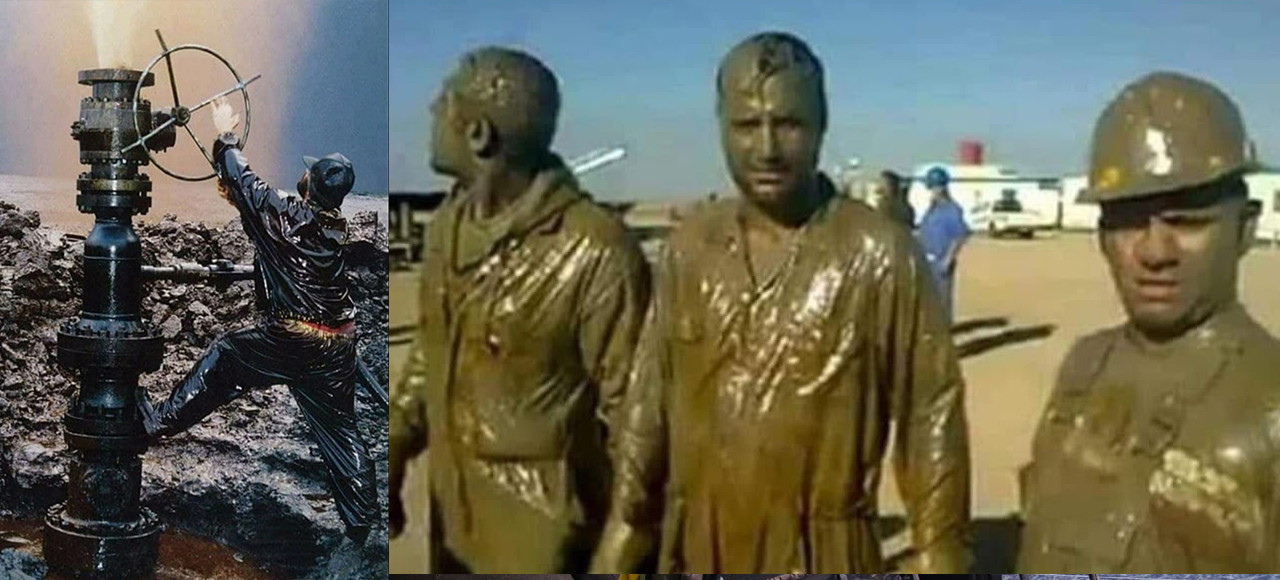
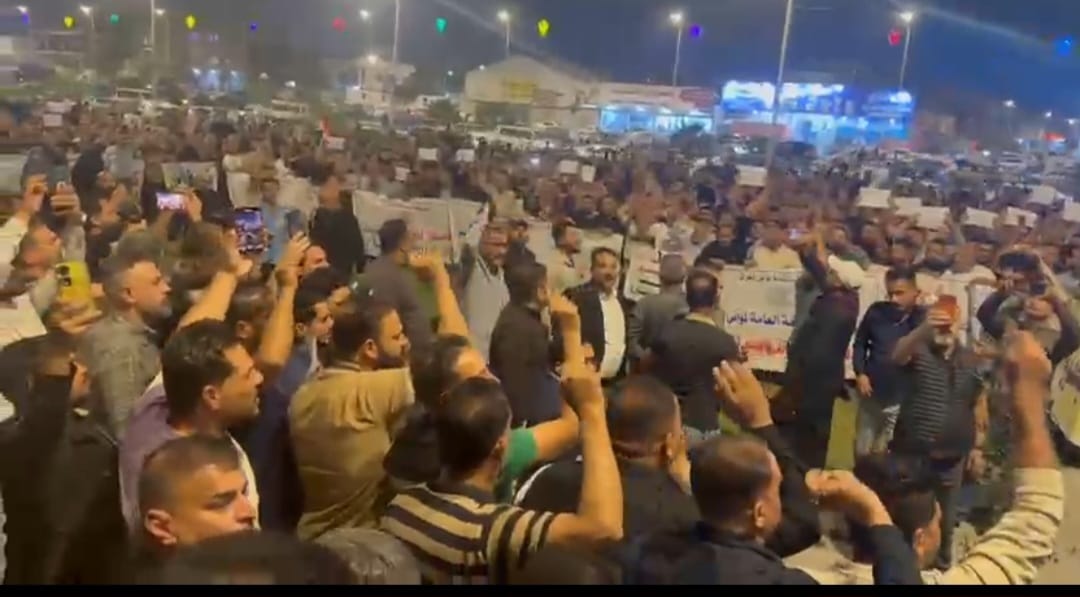
In the south, at the very heart of the oil industry, protests have taken a different form but stem from the same sense of injustice. In Basra, workers and employees in oil companies organized protests demanding rights related to shift systems, the calculation of differential working hours, and the resulting entitlements. One oilfield worker stated: “We work under a harsh shift system, often for long hours and in dangerous conditions, yet the value of those hours is interpreted differently every time. We are not asking for privileges we are asking for our work to be recognized as it is.”
That workers are forced to protest publicly just to compel management to issue clarifications reflects the absence of effective social dialogue mechanisms in a sector that should be a model of good governance. “If there were a genuine channel for negotiation, we wouldn’t be standing here,” said another employee who joined the protest. “But silence is the rule, and protest is the only exception that forces them to listen.”
In this context, the Arab trade union movement views what is happening as going far beyond sectoral or narrow demands and striking at the core of how national wealth is managed. Dr. Hind Ben Ammar, Executive Secretary of the Arab Trade Union Confederation (ATUC), stated:
“What oil workers in Iraq are experiencing today is neither a technical crisis nor a mere administrative dispute. It is the direct outcome of an economic model in which production is managed separately from social justice. It is unacceptable for national wealth to be extracted under harsh conditions while workers are left without regular wages, without protection, and without genuine social dialogue. Forcing workers to bear the cost of contractual chaos or political delay constitutes a clear violation of the principles of decent work and Iraq’s international obligations. From our position within the Arab trade union movement, we affirm that respect for oil workers’ rights is not a sectoral demand it is a fundamental condition for economic stability and social peace. Ignoring this reality will only deepen tensions and threaten the sustainability of the sector itself.”
What unites testimonies from both northern and southern Iraq is the pervasive feeling that workers are left alone to confront opaque administrative and contractual systems in a sector that generates enormous revenues for the state. This reality stands in stark contradiction to the principles of decent work upheld by member states of the International Labour Organization, particularly the right to regular wages, fair working conditions, freedom of association, and collective bargaining. Leaving workers unpaid for months or managing their rights through shifting interpretations is not merely an administrative failure it is a direct violation of fundamental labour rights.
The consequences of this crisis extend beyond workers themselves. Disruptions in fuel transport, even when partial, expose the fragility of supply chains and affect services and prices, while growing tensions inside oilfields and refineries undermine occupational safety, morale, and trust. One southern worker asked pointedly: “If a worker feels that their rights are not guaranteed, how can they be expected to work with maximum focus in a dangerous site?” This question directly links labour rights to industrial safety and underscores how neglecting the former jeopardizes the latter.
From an international trade union perspective, what is unfolding in Iraq’s oil sector is a striking example of wealth management divorced from social justice. Forcing workers to absorb the cost of administrative disorder, contractual complexity, or political delay is not only unjust it is socially dangerous. International experience shows that squeezing the workforce in strategic sectors does not create stability; it lays the groundwork for delayed and potentially uncontrollable social explosions.
The trade union movement views these protests as a legitimate expression of just demands and stresses that the solution does not lie in silencing voices or demonizing strikes, but in clear and concrete measures: guaranteeing the payment of wages on time without exception; reviewing contracting systems that hollow out rights; establishing transparent and mutually agreed mechanisms for calculating shifts and working hours; and opening genuine, binding social dialogue with workers’ representatives.
“We are not against production we are the ones who sustain it,” said one of the striking drivers in the north. “But production built on breaking workers does not last.” This statement encapsulates the essence of the crisis and its political message. In Iraq, where oil is the backbone of the economy, the sustainability of the sector cannot be separated from the dignity of those who work in it.
The year 2026 confronts authorities and decision-makers with a clear choice: either address the root causes of the crisis and build a social contract grounded in decent work and international standards, or continue managing wealth at the expense of workers, with all the real risks this entails for social peace and economic stability. Today’s workers’ message is neither narrow nor sectional it is national and international at once: there is no strong economy without rights, and no sustainable wealth without the dignity of labour

 English
  Arabic