
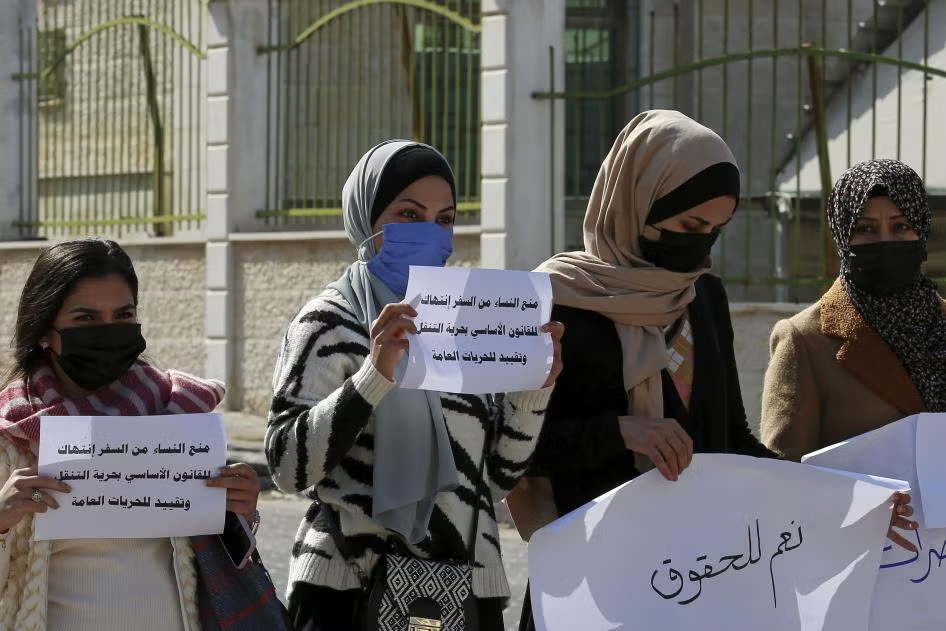
The decision to prevent Egyptian women from travelling abroad for work in certain occupations particularly domestic work and jobs in cafés and restaurants was not a passing administrative measure. It was a mirror held up to a wider way in which many Arab governments still view women: not as fully capable workers, not as citizens with the right to choose, move and work, but as bodies to be controlled, reputations to be guarded, and risks to be hidden rather than confronted.
On the surface, the language is familiar: protecting women’s dignity, shielding them from exploitation, regulating overseas employment but behind this language lies a question that cannot be avoided: why is the response to exploitation to prevent women from working, rather than to prevent employers, brokers and recruitment agencies from exploiting them? Why is the poor woman looking for a job punished, while the system that produces exploitation is left untouched?
According to reports on the Egyptian Ministry of Labour’s decision in early April 2026, the ban instructed labour recruitment companies not to place Egyptian women abroad in domestic work, including as domestic workers, cooks, home nurses, personal assistants and house managers, as well as in some café and restaurant jobs such as waitresses, food and beverage servers and counter workers the ministry justified the decision as necessary to protect the safety and dignity of women workers and to regulate the external labour market.
But protection, when it becomes prohibition, loses its meaning it becomes guardianship instead of fulfilling its duty to regulate labour migration and secure decent working conditions, the state effectively tells women: because we failed to protect you, we will restrict your movement because we did not control recruitment agencies, we will close the door in your face, because labour markets in some destination countries are dangerous, the solution is not to reform their conditions, but to remove women from them.
This is not protection, it is the transfer of state failure onto women’s bodies.
The numbers alone expose the contradiction. Remittances from Egyptians working abroad are not a marginal detail in Egypt’s economy. A report by Al-Araby Al-Jadeed noted that Egyptians abroad sent around $41.5bn last year, an increase of 40.5% from the previous year, making remittances one of the country’s most important sources of national income;Yet when it comes to women, they are not treated as part of the cross-border labour force, but as an exception to be controlled or stopped.
Nor is the region to which Egyptian labour migrates, especially the Gulf, a peripheral market. Saudi Arabia alone hosted, according to UN estimates for 2024, around 13.7 million international migrants, making it one of the largest destination countries in the world,labour market analyses in the Gulf also indicate that millions of Egyptians worked there before the pandemic, within a long economic and social relationship that cannot be reduced to a sudden ban.
Domestic work in Arab countries is precisely one of the sectors most in need of regulation, not denial the International Labour Organization estimates that there are around 6.6 million domestic workers over the age of 15 in Arab states about 8.7% of domestic workers worldwide. Domestic work represents 12.3% of total employment in the region, compared with 2.3% globally.
In many Arab countries, migrant domestic workers remain outside the full protection of labour laws and are tied to sponsorship systems that grant employers extensive power over working conditions, housing and mobility.
This is the truth the decision tries to sidestep: the danger is not women’s travel the danger is an unregulated labour market,the danger is contracts that are not respected, recruitment agencies profiting from desperation, the absence of real labour inspection, embassies that too often lack effective intervention mechanisms, and laws that exclude domestic work from protection or leave women workers at the mercy of employers. The danger is not women’s freedom the danger is the absence of the state when women need it most.
From a feminist perspective, the decision reproduces an old idea: that women are protected by restricting them as if freedom were a luxury as if mobility were a risk women have no right to take as if poverty, unemployment and the lack of opportunities at home were not forces pushing women to seek work abroad. Women do not migrate because they are unaware of the risks , they migrate because the local labour market does not offer enough; because wages do not cover basic needs; because families depend on them; because the economy that asks them to be patient gives them no real alternatives.
From the standpoint of freedom of movement, any restriction on women’s travel must meet strict tests: it must be legal, necessary, proportionate and non-discriminatory but to ban a type of work on the basis of sex rather than on the basis of the contract’s conditions, the recruitment agency’s record, the employer’s status, or the existence of legal guarantees opens the door to clear discrimination. The woman is not being prevented because she signed a specific dangerous contract she is being prevented because she is a woman who wants to work in a sector the state deems unsuitable for her.
More dangerously, bans do not stop migration they only push it into the shadows. A woman who needs to travel will look for another route: an unlicensed broker, a fake contract, a visit visa converted into work, deeper debt, weaker protection, and a permanent fear of filing a complaint because she is now outside the official system. In this way, a decision supposedly designed to protect women from trafficking and exploitation may push some of them into conditions closer to trafficking and forced labour.
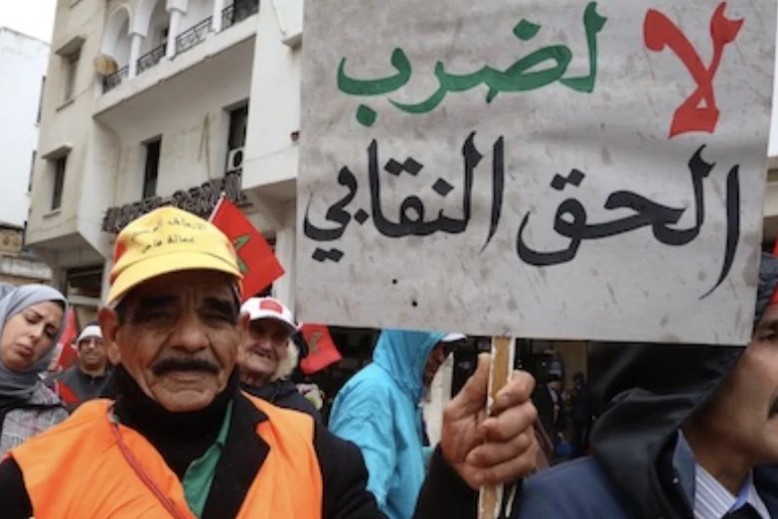
From a trade union perspective, this decision cannot be defended in the name of “protection”, the labour movement must not fall into the trap of paternalistic discourse. But nor should it ignore the reality of abuse the real trade union position must be clear: no to bans, yes to binding protection. No to guardianship, yes to decent work. No to restricting women, yes to regulating labour migration and holding exploiters accountable.
This means that Arab governments in both countries of origin and destination must assume their responsibilities within the bilateral labour agreements they sign. It is not enough to sign general memorandums of understanding and then leave women workers alone to face employers, brokers and sponsors. These agreements must include binding and translated standard contracts, minimum wages, clear working hours, a weekly rest day, health insurance, an explicit ban on passport confiscation, the right to change employer, fast and safe complaint mechanisms, shelters, and immediate legal and consular assistance.
There must also be blacklists of abusive recruitment agencies and employers found to have committed violations, instead of collectively punishing women labour recruitment companies must be required to insure women workers, provide pre-departure training on rights and complaint mechanisms, and ensure that no employment contract becomes valid until it has been reviewed by an independent labour and legal body.
Trade unions must be part of this system, not external observers. Channels of cooperation must be built between unions in countries of origin and destination. Labour hotlines must be established. Women workers must have access to legal support there must be pressure to bring domestic work, care work and service work under the protection of labour laws, domestic work is not a “personal service” outside the economy it is work Care is work, Cleaning is work, Cooking is work. Every form of work deserves wages, rest, protection and dignity.
The Egyptian decision therefore raises a question that goes far beyond Egypt itself: do Arab governments intend to address the vulnerability of women workers by closing doors in their faces again? Or will they finally recognise that women have become central to labour markets, migration, remittances and household economies and that the age of guardianship must end?
No one denies that migrant women workers face real risks but recognising risk does not mean accepting prohibition , recognising risk means confronting those who produce it ; it means prosecuting fraudulent recruitment agencies it means holding embassies accountable when they fail to intervene, it means pressuring destination countries to change their laws it means bringing domestic work out of legal isolation; it means making women’s dignity a binding clause in labour agreements not a slogan used to justify banning them from travel.
Women workers do not need guardians they need rights. They do not need decisions telling them where they may or may not work, they need a state that negotiates on their behalf, unions that defend them, laws that protect them, and agreements that do not leave them alone behind closed doors.
Protection is not closing the road before women. Protection is making the road safe there is no dignity in preventing a woman from working because she is poor, because she is trying to support her family, or because she has chosen to leave in search of a better wage. Dignity begins when the state recognises that women are full citizens and that its duty is not to restrict their movement, but to ensure that their movement does not become a journey into exploitation.
No return to guardianship.
No protection through prohibition.
No justice without freedom.
And no decent work without governments assuming their full responsibility: in contracts, at borders, in embassies, in labour agreements, and in confronting everyone who profits from the vulnerability of women workers.

 English
  Arabic