
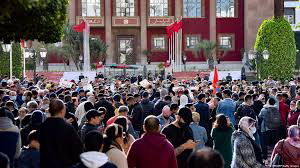
Social dialogue sessions in Morocco can no longer be measured only by how regularly they are held, or by images of the government bringing trade union centres and employers around the same table. The more urgent question today is this: is social dialogue still capable of producing a real impact on workers’ lives, or is it gradually turning into an institutional exercise in managing expectations?
The latest round of social dialogue, held in April 2026, took place in a context marked by a clear paradox. On the one hand, the government insists that previous social agreements have raised wages and cost the public budget significant sums. It has stated that wages have increased by 29% since 2021 and that the cost of social dialogue measures has approached 50 billion dirhams. On the other hand, trade unions entered this round with a clear sense that the impact of these commitments is no longer sufficient in the face of rising living costs, expanding precariousness, eroding purchasing power and delays in several major social files.
In this sense, the disagreement between the government and the unions is not only about what has been achieved on paper, but about what remains in workers’ pockets at the end of the month. The government approaches social dialogue through the lens of financial cost and macroeconomic balances, while trade unions approach it through the lens of real wages and daily dignity. Between these two assessments, a widening social gap is emerging.
This round did not come out of nowhere. The April 2022 agreement was an important moment in the attempt to rebuild trust between the government and the trade union centres, through commitments to institutionalise social dialogue and improve certain income and working conditions. The April 2024 round then produced more concrete outcomes, most notably a general net increase of 1,000 dirhams for public sector employees, to be paid in two phases, alongside a 10% increase in the minimum wage in the private sector and a revision of income tax for wage earners.
But the problem with social agreements does not always lie in their wording; it lies in their ability to withstand economic reality. In July 2025, the second phase of the wage increase in the public sector came into effect, and the minimum wage in the public service rose from 3,000 to 4,500 dirhams. The government presented these measures as proof that it had honoured its commitments. However, trade unions argue that these gains, despite their importance, are no longer sufficient on their own to rebalance living conditions, especially for private sector workers, pensioners, vulnerable groups, and workers in subcontracting, security, cleaning and agriculture.
This is precisely where the limits of trade union satisfaction with the April 2026 round become visible. The three major trade union centres — the Moroccan Labour Union, the Democratic Confederation of Labour and the General Union of Workers in Morocco — did not reject dialogue, but neither did they give it a blank cheque. There is cautious welcome for the return of all parties to the table, but also clear scepticism about the government’s ability to move from presenting its record to making new social concessions.
The Moroccan Labour Union approached the round as a test of the government’s seriousness in protecting purchasing power. Its demand is not limited to a minor improvement or a limited tax measure. It includes a general wage increase in both the public and private sectors, higher pensions, an improved minimum wage, intervention on prices, and a revision of indirect taxes that weigh heavily on working families. The union also links social dialogue to trade union freedoms, considering that any social process that does not protect trade union rights and guarantee respect for organising inside workplaces remains incomplete. In a statement by its National Secretariat, the union stressed that social dialogue had undergone an “unjustified freeze”, calling for serious and productive dialogue and urgent measures to protect wage earners from the deterioration of purchasing power.
The Democratic Confederation of Labour, for its part, offered a sharper reading of the round. It considers that the government continues to present a general discourse about costs and previous commitments, without providing a sufficient answer to the central demand: a direct and general wage increase. From the Confederation’s perspective, dialogue cannot be meaningful if workers do not feel its impact in their income, if outstanding social and sectoral files are not addressed, and if trade union freedoms remain subject to restriction or postponement. The Confederation therefore appears closer to a logic of pressure and mobilisation, rather than simply monitoring from inside the dialogue room.
The General Union of Workers in Morocco places particular emphasis on institutionalising social dialogue and moving it away from the logic of seasonal rounds. It calls for a legal framework that guarantees the regularity of dialogue and the clarity of its commitments, alongside direct social demands including wage increases, tax reform, higher pensions, the unification of the minimum wage across sectors, and the settlement of issues affecting vulnerable groups and unresolved statutory frameworks. Moroccan media coverage has reported that the union stressed the need to adopt the law regulating trade unions, revise the Labour Code, and resolve sectoral files in education, health, local authorities and other sectors.
When the 2026 round is compared with those of 2022 and 2024, the difference is clear. In 2022, the main objective was to relaunch and institutionalise dialogue after years of tension. In 2024, the government was able to present clear financial measures, especially the 1,000-dirham increase in the public sector and the rise in the minimum wage. In 2026, however, the climate is different: unions are not only asking what the government will offer next, but also why previous agreements are no longer enough, and why some categories of workers remain outside the real impact of these gains.
This shift is linked to the economic context. Morocco is recording relatively positive growth indicators. The International Monetary Fund projected real growth of 4.4% in 2026, supported by improved agricultural production and infrastructure investment. Other estimates also suggest that inflation has declined compared with the peaks of previous years, and that the economy is maintaining a degree of macroeconomic stability. But these indicators do not erase the reality of unemployment and precariousness. In 2025, the IMF noted that unemployment had risen to 13.3%, a figure showing that growth does not automatically translate into decent and stable jobs.
Here lies the social paradox: the economy may grow, and overall inflation may decline, but workers will not feel any improvement if their wages remain insufficient, if housing, transport, health and education continue to consume most of their income, and if the gains of social dialogue do not reach the private sector, vulnerable groups and pensioners. This is why trade unions do not view macroeconomic indicators as a final answer, but as an additional argument for demanding a fairer distribution of the fruits of growth.
From this perspective, the April 2026 round did not close the file; it opened a new phase in the test of trust. The government will continue to recall the cost of previous agreements and the positive economic indicators. Trade unions, meanwhile, will continue to insist that the real cost is not measured only by what the budget pays, but by what workers pay every day through their purchasing power, social security, health and dignity.
Therefore, the real question after the April round is not: are Moroccan trade unions satisfied? Rather, it is: have workers received enough to be satisfied? So far, the answer appears closer to no. There is readiness to continue dialogue, but there is also a growing conviction that social dialogue cannot remain merely an exercise in balancing competing pressures. It must become a tool for redistributing justice.
 English
  Arabic